We’ are officially past the midpoint of 2026, and I wanted to take a moment to bring you up to speed on where the Tri-Cities housing market stands, what renovation projects are actually worth your money right now, the design trends that are shaping our homes, and a few financial moves that can make a real difference in your budget. Whether you’re buying, selling, or simply enjoying the home you’re in, there’s something here for you.
Where the Tri-Cities market stands right now
The Tri-Cities housing market has settled into a steady rhythm. The full-year 2025 median sales price across the region came in at $433,000, up about 1.9% from the year before. That kind of moderate, sustainable appreciation is actually a healthy sign — it means values are growing without the volatile swings that make buyers nervous or sellers overconfident.
Looking at individual cities, Richland remains the most expensive of the three core markets at around $450,000, followed by Pasco at roughly $425,000 and Kennewick at about $408,000. New construction continues to expand inventory, particularly in Pasco and West Richland, giving buyers more options than they’ve had in years. Homes are going to pending in roughly 30 days on average — still a healthy pace, but with more breathing room than the frenzied days of 2021 and 2022.
What does this mean for you? If you’re a buyer, you have more negotiating power than you’ve had in a while. If you’re a seller, pricing correctly from the start matters more than ever — overpriced listings are sitting. And if you’re a homeowner just watching the market, your equity position remains solid. For a closer look at each neighborhood, check out my neighborhood guides.
Which home improvements are actually worth it?
If you’re a homeowner thinking about upgrades — or a seller prepping to list — the latest Cost vs. Value data makes a compelling case for focusing on high-impact, lower-cost projects rather than full-scale remodels. Here’s what’s delivering the best return right now:
- Garage door replacement: This is the undisputed champion, returning roughly 268% of its cost in added value. At an average cost of about $4,700, it’s the single smartest curb appeal investment you can make.
- Steel entry door replacement: Returning around 216% on an average investment of roughly $2,400, a new front door transforms the first impression of your home at a very reasonable price point.
- Manufactured stone veneer: Adding stone accents to your exterior returns about 206%. It gives a home instant character, especially in neighborhoods where most homes share similar siding.
- Minor kitchen remodel: Think refaced cabinets, new hardware, updated countertops, and mid-range appliances — not a gut job. The return sits around 96–107% on roughly $28,000 in spending. By contrast, a major luxury kitchen renovation often returns only about 62%.
The pattern is clear: exterior upgrades and targeted cosmetic refreshes consistently outperform expensive interior overhauls. In the Tri-Cities, where median prices hover around $433,000, you want to avoid over-improving past your neighborhood. A thoughtful $28,000 kitchen refresh? That can make your home show beautifully and sell faster.
The design trends shaping Tri-Cities homes this summer
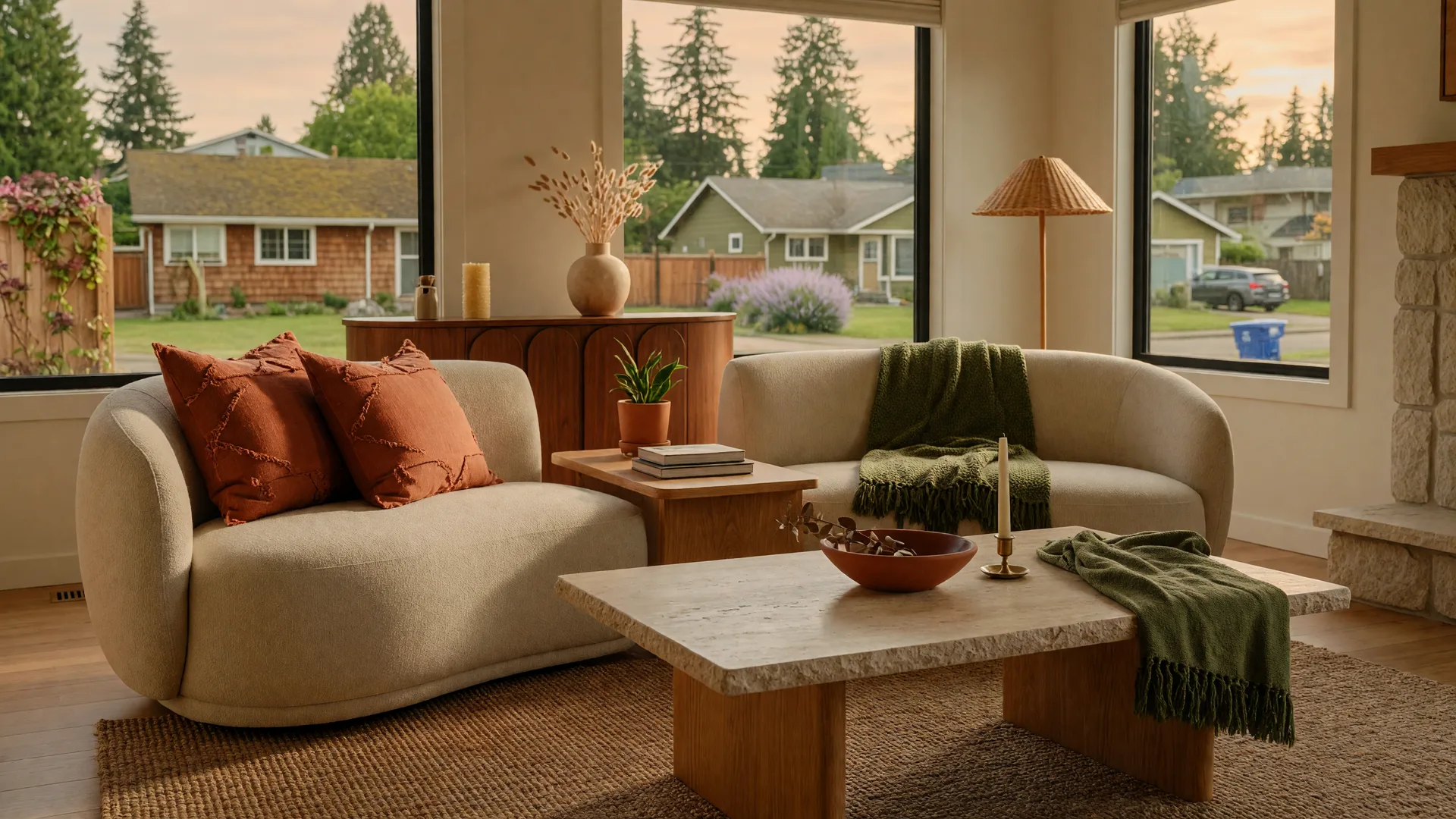
The cool-gray-everything era is officially behind us. The trends dominating 2026 are warm, textured, and deeply intentional — and they translate beautifully to Tri-Cities homes.
Warm, organic color palettes are leading the charge. Terracotta, sage green, olive, clay, butter, and espresso brown are replacing the stark whites and grays of the past decade. These colors feel inviting without being trendy in a way that will look dated in two years. In a market like ours, where natural light is abundant and the surrounding landscape is earthy and open, these tones feel like a natural fit.
Natural materials are also having a major moment. Walnut, smoked oak, limestone, travertine, ceramic, and rattan are showing up in countertops, flooring, furniture, and accent pieces. There’s a collective move toward authenticity — materials that age gracefully and feel substantial, not flashy.
Curved silhouettes and sculptural forms are replacing the hard geometric edges that dominated the last decade. Rounded island corners, arched details, and softer furniture lines make spaces feel more welcoming and livable. The Japandi aesthetic — a fusion of Japanese wabi-sabi and Scandinavian hygge — continues to grow in popularity, emphasizing mindful minimalism with genuine warmth.
And perhaps the biggest shift: wellness-focused spaces are now expected, not just desired. Spa-like primary bathrooms, dedicated areas for quiet reflection, and spaces that support daily routines are standing out in a buyer’s mind. If you’re selling, staging one of these spaces can set your home apart.
Financial moves every Tri-Cities buyer and homeowner should make right now
Let’s talk money — because the smartest decisions in real estate start long before you step into a house.
For buyers: Mortgage rates are currently hovering around 6.67% for a 30-year fixed and 5.80% for a 15-year. That’s not the sub-3% environment of a few years ago, and it’s not likely to return anytime soon. What that means practically: waiting for a perfect rate could mean waiting a very long time — and while you wait, home values continue to appreciate. If you’re a first-time buyer, the best thing you can do right now is get pre-approved, understand your full monthly payment (including taxes, insurance, and any HOA), and start looking before peak summer competition heats up. For a full breakdown of what to expect, visit my First-Time Buyer Hub.
For homeowners: A few key financial habits can make a big difference over time. Financial experts recommend keeping total housing costs at or below 25–30% of your take-home pay. Beyond that, budget roughly 1–3% of your home’s value annually for maintenance and repairs — on a $433,000 home, that’s about $4,300 to $13,000 per year. It sounds like a lot, but spreading it out to $360–$1,080 a month makes it far more manageable, and it protects you from surprise expenses.
On the tax front, the SALT deduction cap increased to $40,400 for 2026, which may benefit homeowners in higher-tax situations. And the mortgage interest deduction is now permanent at $750,000. If you haven’t reviewed your homeowner’s insurance policy this year, now is the time — rates have been adjusting upward across Washington, and you want to make sure your coverage reflects your home’s current value. If your property tax assessment felt high this spring, there’s a window to appeal in most Washington counties — don’t let it pass without at least reviewing your numbers.
And if you’re relocating from out of state, understanding these financial details before you make the move can save you thousands. My relocation guide covers everything from market specifics to the financial nuances of buying in a new state.
Real estate is more than a transaction — it’s about caring for people and their largest financial investment. Whether you’re buying, selling, renovating, or simply planning ahead, I’m here to help you make decisions that serve you well for years to come.
Sources: Tri-Cities median home price and inventory data from Tri-City Herald and Tri-Cities Business News, 2025 full-year data. Mortgage rates from Freddie Mac Primary Mortgage Market Survey, July 2025. Renovation ROI figures from Zonda’s 38th annual 2025 Cost vs. Value Report. Design trend analysis from Houzz, Archie Interiors, and Century 21 Redwood, Summer 2026. Personal finance guidance from Ramsey Solutions, CNBC, and Veterans United, 2026. Tax information from TurboTax and Swat Advisors, 2026. This is not financial advice — consult a licensed lender and financial professional for personalized guidance.